
Not All Screens Are Equal
Rethinking Screen Time in Education

There’s a growing movement to remove screens from classrooms entirely. I understand the impulse, no one wants to see five-year-olds zoned out in front of a screen for eight hours a day. But in our rush to protect children from the very real harms of excessive, passive screen time, we’re overlooking something crucial: not all screen time is created equal.
The Double Standard
Here’s what strikes me as odd: we tell parents that screens are developmentally harmful for children, yet we don’t tell adults to abandon screens entirely. We don’t suggest that professionals stop using computers for work, or that adults shouldn’t use their phones to learn new recipes, follow workout videos, or video call distant relatives.
Why? Because we intuitively understand that the how and why of screen use matters more than the screen itself.
We live in a world that increasingly requires digital literacy. Our children will need to navigate technology thoughtfully and skillfully. Shielding them entirely from screens doesn’t prepare them for that reality—it just delays the inevitable while missing opportunities for intentional, beneficial use.
What Intentional Screen Time Looks Like
Let me give you some examples from my own home with my three-year-old:
We turn on Danny Go and dance together in the living room. He’s moving his body, following instructions, laughing, and we’re connecting.
He plays with the calculator app on the iPad, delighting in creating absurdly large numbers. He’s exploring math concepts, cause and effect, and discovering patterns.
We watch cooking videos together while we cook, pausing to try techniques or talking about what we see. He’s learning sequencing, following directions, and connecting screen content to real-world action.
Yes, this is supervised screen time. But you know what else is supervised? School.
In the Classroom
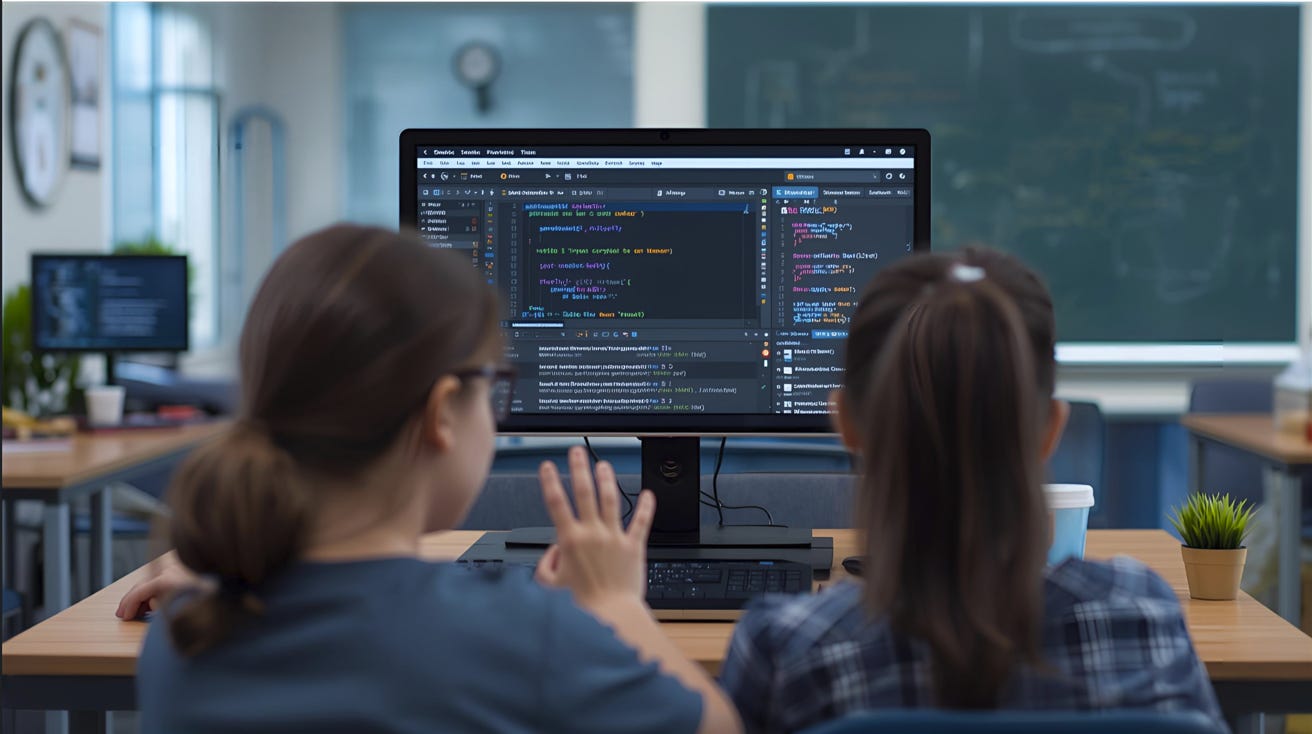
The question isn’t “screens or no screens?” It’s “What are students actually doing with screens?”
Should students spend all day watching YouTube? Of course not. But should they be able to work through a self-checking Desmos activity that gives them immediate feedback and lets them learn at their own pace? Absolutely.
Should they passively consume content for hours? No. But should they use digital tools to create, explore, problem-solve, and collaborate? Yes.
The screen is just a tool. Like any tool, it can be used poorly or used well.
Making the Distinction
Here’s what we should be asking about screen time in schools:
Is it active or passive? Are students engaging, creating, and thinking—or just consuming?
Is it connected or isolated? Does the screen facilitate learning with others, or does it replace human interaction?
Is it purposeful or filler? Is there a clear learning objective, or is it just keeping kids quiet?
Does it enhance or replace? Is the screen adding something valuable that couldn’t be done another way, or is it a substitute for something better?
A kindergartener watching 90 minutes of educational TV is very different from a fifth grader using a simulation to explore concepts in physics. An eight-year-old playing addictive mobile games is very different from that same child using coding software to build something.
The Real Risk
The real risk isn’t screens themselves. It’s thoughtless implementation. It’s using technology because it’s there, not because it’s the best tool for the job. It’s substituting supervision and intention with passive consumption.
But when we react by banning screens entirely, we throw out the baby with the bathwater. We lose access to powerful tools for differentiation, immediate feedback, simulation, creation, and connection.
Moving Forward
Instead of “no screens in schools,” let’s advocate for “intentional screens in schools.”
Let’s train teachers to use educational technology effectively. Let’s fund tools that genuinely enhance learning, not just digitize worksheets. Let’s maintain a healthy balance between screen-based and hands-on activities. And let’s teach children to be thoughtful consumers and creators of digital content, because that’s a skill they’ll need for life.
The screen isn’t the enemy. Mindless consumption is. And we can do better than banning our way out of that problem.
What’s your take? How do you think about screen time in your home or classroom?